
Otero County Warrant Searches
Otero County posts no single public warrant portal. The first stop is New Mexico Case Lookup, the state's public court-case index. Choose a likely location before you search. Let the paperwork guide that choice. A city citation belongs to a municipal court. County traffic and misdemeanor matters usually start in Magistrate Court. Broader criminal cases may run through District Court. An Otero County warrant search works best when you enter the legal name used in the court matter, plus a case number if you have one. Treat any result as a lead, not a final status. The clerk can then explain whether a failure to appear, a payment issue, or a warrant entry remains, and which action a judge must approve.
- Read the notice and identify the court, location, date, and citation or case number.
- Select the location in Case Lookup and use the available Case Search option.
- Compare the case type with the event. Do not route a municipal citation to a county court just because both are in Alamogordo.
- Call the issuing clerk, the Sheriff’s Office for agency routing, or the Detention Center if the person is already detained.
- Ask a licensed New Mexico attorney about surrender, bond, recall, or another response before taking personal action.
Case Lookup Field Limits in Otero County
The public entry page opens with a location choice. Case Search sits beside it. Inner fields stay hidden until that choice is made, so Otero County users see only part of the form at first. The published Judiciary instructions spell out the name format: last, first, middle, with no commas or periods. Optional filters cover date of birth, driver-license, court type, location, category, and date. Useful, but limited. Check the live widget first. The safest input is a case number printed on your own notice or summons. Never place a real driver-license number, birth date, address, or case number in a public page, email, or shared example. Several matches under one common name? Narrow by court and event rather than assuming the first record fits, and see the published Case Lookup instructions for the Judiciary's own field-by-field directions.
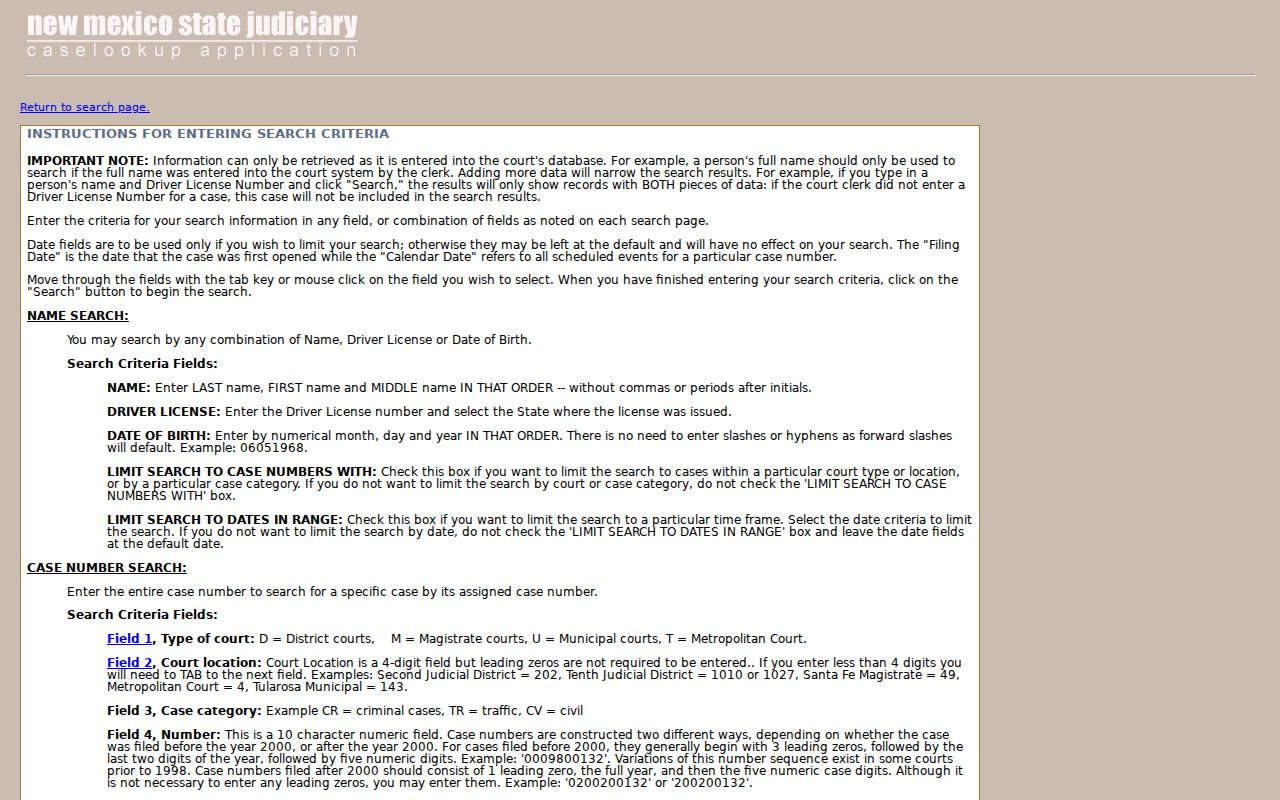
The official instructions reflect older published search directions. They show no private result and do not guarantee the live layout an Otero County searcher will meet.
What a Warrant Search Asks For
These fields explain how to narrow an official public case search. No single Otero County court record carries every field.
| Field | Type | Use in Otero search | Caution |
|---|---|---|---|
| Location | Selector | Choose the court or place before inner search fields appear. | Wrong location can hide a case. |
| Name | Text | Published instructions use LAST, FIRST, MIDDLE order. | Common names need a second identifier. |
| Case number | Text | More precise when printed on a notice. | Keep a private number out of examples. |
| Date or court filter | Optional filter | Published directions describe date, court type, location, and category limits. | Verify what the current screen exposes. |
| DOB or driver license | Optional identifier | Published instructions describe both as possible match aids. | Enter only in the official portal. |
The Court Code Can Narrow the Search
Case numbers carry their own code, and the published New Mexico instructions describe it. The letter segment marks the court level. D means District, M means Magistrate, U marks Municipal, and T stands for Metropolitan. Categories follow. CR marks criminal, TR traffic, CV civil. The instructions give an official Tularosa municipal example with location code 143. No Alamogordo or Cloudcroft code appears. So treat the syntax as a clue, never a substitute for the clerk. A U-style number signals a municipal matter, not a District Court case, and a traffic category never tells MVD to settle what the court is owed. Unsure which Otero County office holds the file? The clerk can confirm whether a record displays and what status questions get answered by phone, and the Twelfth District court docket reference shows where these court segments appear.
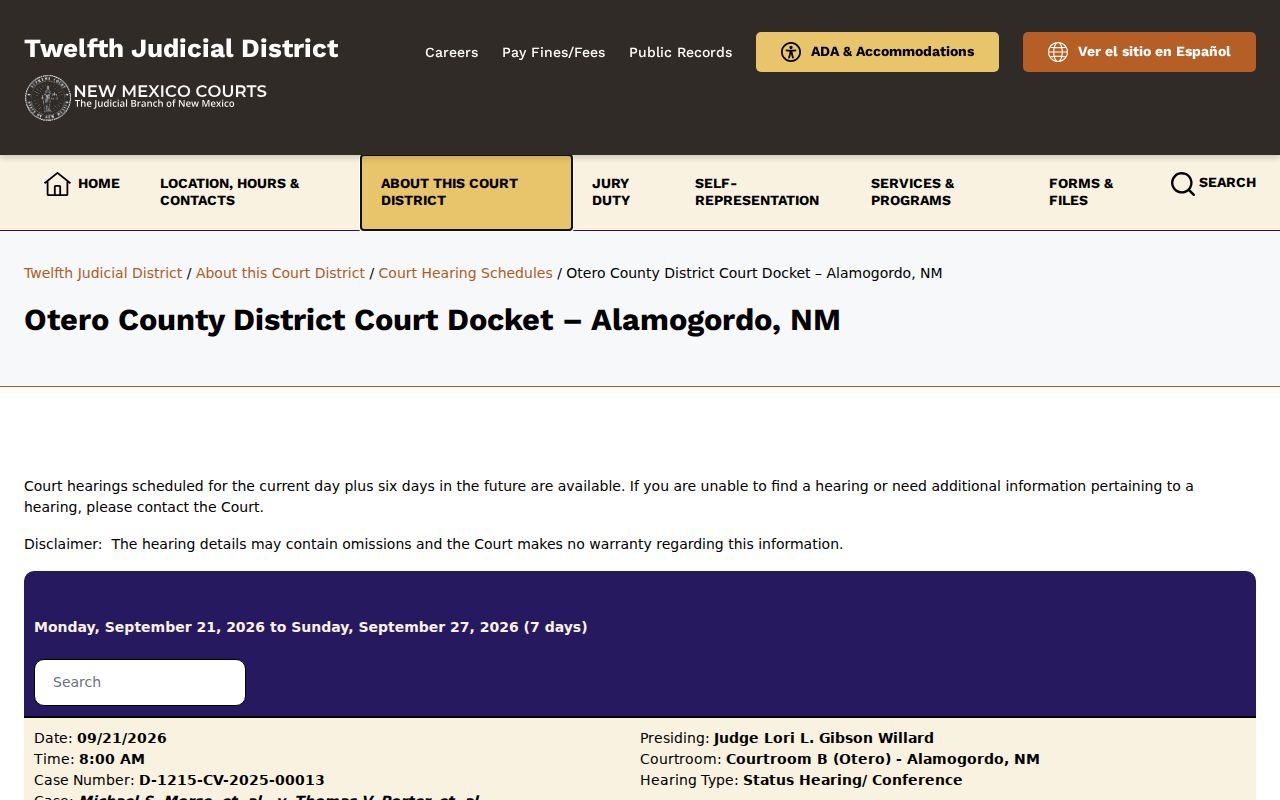
The docket reference stands as a neutral citation from the court itself and names no Otero County warrant subject.
Otero County Warrant Search Results
A public result is a pointer, nothing more. It can flag a case, charge, docket event, payment entry, or warrant-related status. It may not show service, surrender, return, cancellation, recall, or restricted law-enforcement detail. Ask the issuing Otero County court what the result means today.
| Case or warrant number | The identifier used to match the clerk’s file. CASE-ID is a blank example only. |
|---|---|
| Court and location | Shows which office controls the next procedural question. |
| Charge or event | May identify traffic, criminal, DWI, ordinance, or another matter without proving current warrant status. |
| Docket or payment event | Can show activity in the public index, but the Judiciary warns it is not the official record. |
| Warrant status | May be absent or incomplete. Ask the issuing court whether the order is active, served, recalled, or otherwise changed. |
Why a No Result Needs a Clerk Call
A blank search proves little. The miss may come from the wrong court, a new or changed order, a municipal display limit, a juvenile or family-violence restriction, a sealed record, or status held in a restricted law-enforcement system. The public portal also covers only some documents. A blank screen rules nothing out about Otero County warrants. The New Mexico Judiciary says Case Lookup is not the official record. Documents are not available through the public index either. For a known obligation, call the Otero County clerk with the citation or case number in hand. Older administrative files travel the county IPRA route instead. The New Mexico Judiciary public-access guidance spells out these limits and points readers back to the court.
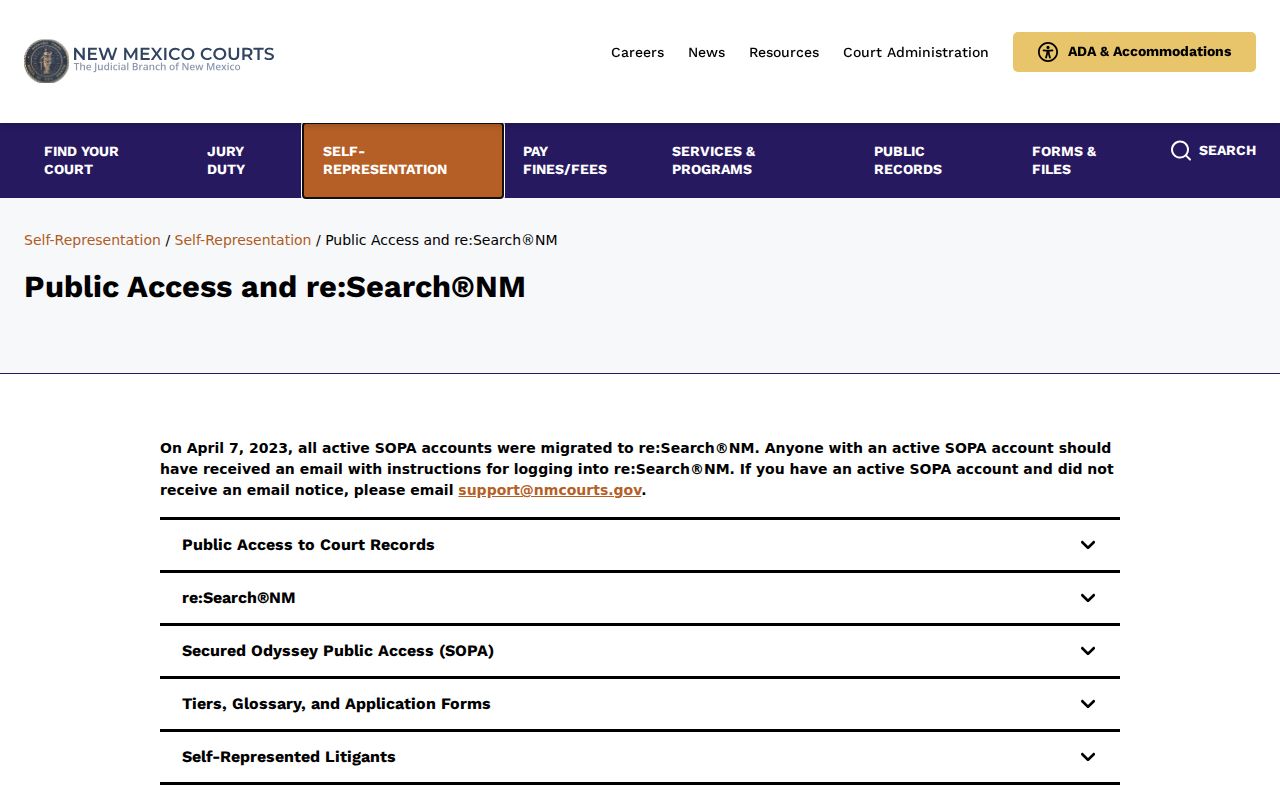
Treat any Otero County result as a lead and follow up with the court clerk directly.
Otero County Warrants: Who Holds What
Case Lookup shows only what the public index displays. Each office in Otero County holds its own slice. The District Court clerk in Otero County handles district matters and records questions. Magistrate Court, at 263 Robert H. Bradley Drive, 575-437-9000, takes many traffic, misdemeanor, DWI, and preliminary felony matters. Municipal clerks go their own way. Alamogordo, Tularosa, and Cloudcroft each keep their city or village cases. The Sheriff's Office sits at 3208 N White Sands Blvd., 575-443-2935. Dispatch, 575-437-2210 or 800-874-3743, routes non-emergency calls. It is no dedicated warrant line. Detention, at 1958 Business Center Blvd. and 575-437-6420, answers custody and bond questions rather than public warrant lookup. For the fuller picture, the Otero County active warrant search page explains why the sheriff posts no public roster and why issuing-court confirmation matters.
Confirming a Sheriff Contact
Otero County keeps its Sheriff’s page light on warrant detail. There is no searchable active-warrant roster, no downloadable warrant file, no stated update schedule, and no dedicated warrant line. One phone number, 575-443-2935, routes calls. Ask which court or agency handles a known case question. Mind the limits, though: the Sheriff cannot confirm every municipal, magistrate, district, federal, tribal, or juvenile matter, and the page does not promise otherwise. Keep the ask narrow. Which court clerk handles a status question, what general information can be disclosed, and whether the county IPRA form fits a public administrative record request. Treat dispatch as routing, not as a court clerk. A phone conversation with an agency never proves an active warrant either way.
Which Warrants Stay Restricted
Not every record is public. Otero County restricts juvenile files, sealed cases, protected identifiers, family-violence categories, and law-enforcement-sensitive material. Case Lookup may omit such items. A records response may arrive redacted, so a blank search is never a complete answer on an outstanding warrant.
Key rules:
New Mexico IPRA guidance supports requests for releasable records, subject to exemptions and confidentiality.
New Mexico Judiciary public-access guidance explains that Case Lookup is limited and does not supply every document.
Juvenile confidentiality rules mean juvenile warrant details should not be sought or republished as public content.
Record Requests Do Not Clear a Personal Matter
Otero County’s written records process has its own job. It asks for your name, contact information, a specific description, an inspection or copies choice, and fee acknowledgment. The county publishes response timing and copy fees. It works well for a blank form, a policy, aggregate figures, or a dated administrative record. It is not the fast lane. Asking the issuing court what a person must do next is a different, quicker conversation. Match each office to its role. A court clerk takes status and procedural questions, the Sheriff handles routing, Detention handles custody and bond, and IPRA governs releasable public records. Keeping those roles straight is the most reliable Otero County warrant check.